

Introduction
The Shri Ram Mandir in Ayodhya is not just a magnificent temple; it is a symbol of faith, culture, sacrifice, and the spiritual identity of millions of Hindus around the world. Every devotee who offers money, gold, silver, or prayers does so with complete faith that their offering is dedicated to Lord Shri Ram.
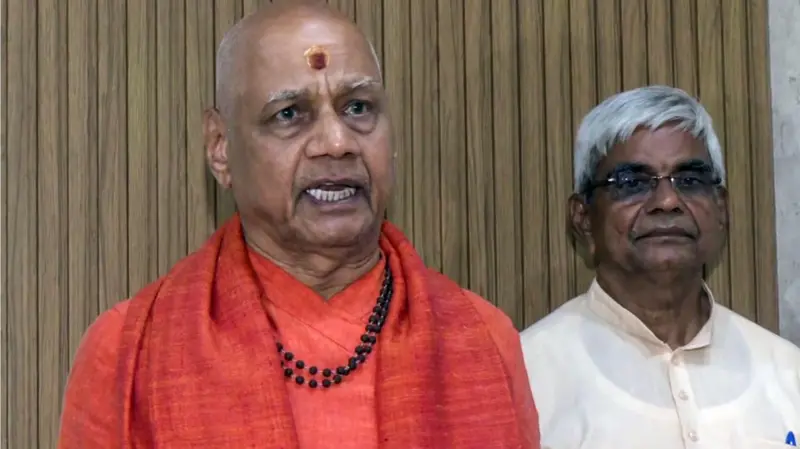
Recently, Krishna Mohan has been appointed as the interim General Secretary of the Shri Ram Janmabhoomi Teerth Kshetra Trust. His responsibility is to help manage the trust’s administrative work and ensure that the temple’s activities continue smoothly until a permanent arrangement is made.
Recent Discussions Around the Ram Mandir Trust
In recent times, there have been media reports and public discussions regarding the management of the Ram Mandir Trust, including questions about administration, donations, and security. Whenever a temple receives large donations, people naturally expect complete transparency and accountability.
If any complaint or allegation of financial irregularity or theft arises, it should be investigated fairly by the competent authorities. No individual should be declared guilty without evidence, and if anyone is found responsible after a proper investigation, the law should take its course.
Donations Are an Offering to Lord Ram
Millions of devotees donate cash, gold, silver, ornaments, and other valuable items to the temple. These offerings are expressions of faith rather than ordinary financial transactions.
Many devotees believe that:
Cash donations should be deposited directly into the temple trust’s official bank accounts.
Every donation should be properly recorded and audited.
Modern security systems and digital accounting should be used.
Gold and silver offered by devotees may be safely preserved, while some ornaments can be crafted for ceremonial use during the adornment (Shringar) of Lord Ram according to temple traditions.
Such measures can strengthen public trust while protecting the offerings made by devotees.
Faith Is Not a Business Transaction
True devotion does not mean asking God for wealth, a house, a job, or material success before offering prayers.
Prayer is a path to inner peace, self-discipline, wisdom, compassion, and moral strength. A devotee worships because of faith, gratitude, and love—not as part of a bargain.
Our scriptures teach that sincere devotion helps people overcome fear, anger, greed, and confusion. It encourages good character and righteous conduct.
Learning from the Scriptures
The lives of revered figures such as Sita, Draupadi, saints, and sages inspire us through their ideals of courage, sacrifice, and righteousness. Rather than comparing ourselves directly with them, we can learn from their virtues and apply those teachings in our own lives.
Dharma Begins with Responsibility
Hindu philosophy teaches that every person should fulfill their responsibilities toward family and society while walking on the path of righteousness.
Those who wish to dedicate more time to spiritual life may choose to spend time in temples, ashrams, satsangs, bhajan-kirtans, or spiritual retreats after completing their duties. One can also live a deeply spiritual life while remaining with one’s family by practicing honesty, compassion, discipline, and daily worship.
Ashrams and temples serve as places where spiritual discipline, prayer, service, and learning continue throughout the year. Many also contribute to society through education, food distribution, healthcare, and community service.
The Importance of Good Values
Material success alone does not bring lasting happiness. Without good values, honesty, kindness, and self-control, life can become restless despite wealth.
Prayer, meditation, scripture reading, and service to others help develop inner strength. They teach patience, forgiveness, and the courage to face life’s challenges peacefully.
As people grow older, many naturally feel a stronger connection with spirituality. Visiting temples, participating in satsang, spending time in an ashram, or simply remembering God can bring mental peace and emotional balance.
Protecting the Sanctity of Temples
Temples belong to the faith of millions of devotees. Therefore:
Donations should be managed with complete transparency.
Strong security systems should protect valuable offerings.
Independent audits should build public confidence.
Any allegation of theft or misuse should be investigated fairly by the appropriate authorities.
Anyone proven guilty under the law should face legal consequences, while innocent people should not be blamed without evidence.
Conclusion
The Ram Mandir is a symbol of devotion, unity, and spiritual inspiration. Every devotee has the right to expect honesty, transparency, and responsible management of temple offerings. At the same time, faith teaches us to remain truthful, avoid spreading unverified allegations, and respect the rule of law.
True devotion is reflected not only in rituals but also in honesty, compassion, service, and righteous conduct. When individuals strengthen their character and society protects its sacred institutions with integrity, both religion and humanity flourish together.