
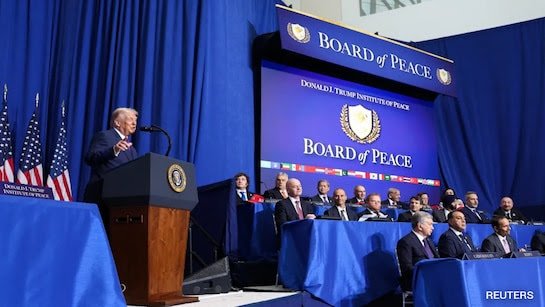
In a significant diplomatic development, India participated as an observer in the first meeting of former U.S. President Donald Trump’s Peace Board held in Washington, D.C.. The meeting marked the beginning of a new dialogue platform aimed at discussing global peace initiatives, strategic cooperation, and international security concerns.
What Is the Peace Board?
The Peace Board initiative, associated with Trump’s diplomatic vision, is intended to bring together policymakers, strategists, and international representatives to discuss conflict resolution, geopolitical stability, and cooperative security frameworks. The first session reportedly focused on global tensions, economic stability, and multilateral partnerships.
India’s participation as an observer highlights its growing influence on the global stage and its interest in contributing to peace-building efforts without formally aligning with any single bloc.
Why India’s Observer Role Matters India attending as an observer rather than a full member reflects a balanced diplomatic approach. As one of the world’s largest democracies and a rising global power, India often maintains strategic autonomy in international affairs.
By participating:
- India gains insight into emerging diplomatic strategies.
- It strengthens communication channels with U.S. policymakers.
- It reinforces its image as a responsible global stakeholder.
India has consistently advocated peaceful conflict resolution, dialogue-based diplomacy, and respect for international law. Observing such meetings aligns with its broader foreign policy goals.
Strategic Implications
The meeting in Washington comes at a time when global politics is experiencing rapid changes—ranging from regional conflicts to economic realignments. India’s presence demonstrates:
- Its willingness to engage in global peace discussions.
- Its interest in monitoring international strategic developments.
- Its commitment to maintaining balanced relations with major powers.
For the United States, India’s involvement adds credibility and diversity to the dialogue, given India’s strong ties with multiple global regions, including Asia, Europe, and the Indo-Pacific.
India–U.S. Relations in Focus
Over the past decade, India–U.S. relations have expanded significantly in areas such as defense cooperation, trade, technology, and security. Participating in peace-oriented discussions further deepens diplomatic trust.
Although the meeting was held under a framework associated with Trump’s leadership vision, India’s role as an observer emphasizes diplomacy over political alignment.
Global Reaction and Future Outlook
International observers see India’s participation as a reflection of its evolving diplomatic maturity. Rather than taking extreme positions, India continues to pursue multi-aligned partnerships—engaging with various global initiatives while safeguarding national interests.
The Peace Board’s future meetings may explore:
- Conflict mediation strategies
- Economic resilience frameworks
- Counter-terrorism cooperation
- Technological and cybersecurity challenges
If the platform gains broader international participation, India’s early involvement could
position it as an influential voice in shaping discussions.
Conclusion
India’s participation as an observer in the first Peace Board meeting in Washington signals its proactive yet balanced diplomatic approach. By engaging in global peace initiatives while maintaining strategic independence, India continues to strengthen its international standing.
In an increasingly complex world order, such dialogues—whether formal or exploratory—play an important role in fostering communication and reducing global tensions. India’s presence reflects not just political interest, but a broader commitment to dialogue, cooperation, and long-term global stability.